MENU
 APPLY
 GIVE
 CHALLENGE



Businesses across industries face growing cyber threats. Neumann University’s Master of Science in Cybersecurity and Forensics is designed to prepare students with the practical skills needed to help protect systems, data, and organizations. The cybersecurity program emphasizes the growing role of artificial intelligence in cybersecurity and digital forensics, helping students understand both how AI can strengthen security efforts and how cybercriminals are using AI-driven tactics such as deepfakes and advanced phishing attacks.
Offered fully online, the cybersecurity and forensics degree is built for working professionals who want to earn a master’s degree with minimal disruption to their schedules. Students can complete the degree in as little as 21 months while gaining hands-on experience through hacking lab simulations and other applied cybersecurity training.
Students can choose between two tracks: Cyber Systems Engineering or Forensics Investigator, depending on their interests and career goals. The program also helps prepare graduates for industry-recognized cybersecurity certifications such as Certified Ethical Hacker (CEH), Systems Security Certified Practitioner (SSCP), and Certified Information Security Manager (CISM). For those looking for a shorter starting point, Neumann also offers a 9-credit graduate Cybersecurity Certificate, and those credits can later be applied toward the master’s degree.
For more information, contact our graduate admissions office at gradadultadmiss@neumann.edu or 610-361-5208.
The program requires 10 courses for a total of 30 credits, including six foundational courses and four specialized courses in the chosen track. The goal is for students to be able to complete the program in 21 months.
The MS in Cybersecurity program offers two different tracks for students: Cyber Systems Engineering and Forensics Investigator. Both tracks require 30 credits of coursework, comprising 18 credits of the Foundational Core and 12 credits in each specialization.
Track 1 – Cyber Systems Engineering
Track 2 – Forensics Investigator
The forensics and cybersecurity master’s degree tuition is based on the number of credits students are enrolled in. For more information, visit the Office of Financial Assistance.
While Neumann is known for its competitive, affordable sticker price, we know that most graduates need financial assistance of some kind while enrolled in graduate school. For everything you need to know about your financial aid options, download our guide: Offsetting the Cost of Graduate School — Financial Aid for Graduate Students.
Forensics and cybersecurity degree applicants must submit official transcripts from all institutions attended and a current professional resume.
For more information on the admissions requirements for this program, visit our admissions page.
Neumann University offers a number of graduate assistantships in various offices throughout campus including residence life, campus ministry, enrollment management, student leadership & engagement, athletics, knights pantry, the library, university advancement and so many more.
Graduates of the Master of Science in Cybersecurity & Forensics may pursue roles in cybersecurity operations, digital forensics, incident response, network security, cloud security, cybercrime investigation, and information security management across industries such as business, finance, healthcare, government, technology, and law enforcement.
Neumann’s master’s in cybersecurity and forensics is designed to help students build advanced technical, investigative, and ethical decision-making skills through coursework in cybersecurity management, AI and cyber ethics, network security, digital forensics, incident response, penetration testing, cloud security, cyber threat intelligence, and cybercrime investigations.
This Master of Science in Cybersecurity & Forensics can help you build toward a specialized career path that fits your interests, whether you are drawn to threat detection, digital investigations, incident response, network defense, cloud security, or cybercrime analysis.
Cybersecurity Program Partners:
• Upper Chichester Township Administration
• Sun East Federal Credit Union
• City of Philadelphia
• Aqua America
• Access IT Group, Inc
• Abenity
Access Our Free eBook
What Can We Answer For You?
There’s an abundance of career opportunities for cybersecurity professionals. According to the U.S. Bureau of Labor Statistics, jobs in cybersecurity are expected to grow by 21% over the next 10 years — significantly greater growth than average.
Some roles cybersecurity graduates can hold include Chief Information Security Officer, Cybersecurity Analyst, Computer Information Systems Manager, and Senior Cybersecurity Engineer.
ZipRecruiter reports that the average salary for a job in cybersecurity is $122,890. Cybersecurity is a growing and in-demand field, and salaries are expected to remain very competitive for the next several years.
Jobs in cybersecurity are available in almost every industry, including computer systems, banking, government, finance, healthcare, and more. Grads with a graduate degree in cybersecurity can find employment in large teams that manage complex information systems, as cybersecurity experts developing new cybercrime prevention technologies, and in many other settings.
The online cybersecurity courses include a total of 10 courses. Six of these are foundational courses in cybersecurity advanced principles, such as network security, incident response, cyberlaw, and more. The remaining four courses are related to your concentration and cover more in-depth topics, including cyberterrorism and cybercrime investigation. You’ll round out your cybersecurity degree with a capstone project.
This digital forensics and cybersecurity degree prepares you to take exams for multiple cybersecurity certifications. After earning the master's in cybersecurity and forensics you’ll have the opportunity to sit for the CEH, SSCP, and CISM exams. (Note: CISM certification also requires at least three years of relevant professional experience.)
For another program that involves training in cybersecurity, consider our Master of Science in Forensic Accounting and Cybercrime with an emphasis in forensics and fraud detection.
The Master of Science in Cybersecurity & Forensics can be completed in as few as 21 months. The 30-credit program consists of 10 courses, including six foundational cybersecurity courses and four specialized courses in the student's chosen track. Students can choose between Cyber Systems Engineering and Forensics Investigator to align their graduate education with their professional interests. Actual completion time may vary depending on individual enrollment and academic progress.
Yes, the MS in Cybersecurity & Forensics is offered 100% online, making it an accessible option for working professionals seeking to advance their education. The cybersecurity and forensics degree combines advanced cybersecurity coursework with hands-on learning opportunities, including hacking lab simulations and applied cybersecurity training. Students can develop technical and investigative skills while completing their graduate coursework remotely.
Neumann's Master of Science in Cybersecurity & Forensics offers two specialized tracks designed to support different professional interests. The Cyber Systems Engineering track emphasizes technical cybersecurity concepts, including cryptography, cloud security, and advanced cybersecurity practices. The Forensics Investigator track focuses on cybercrime investigations, cyber threat intelligence, international terrorism, and cyberwarfare. Both tracks share the same foundational cybersecurity coursework and require 30 credits to complete.
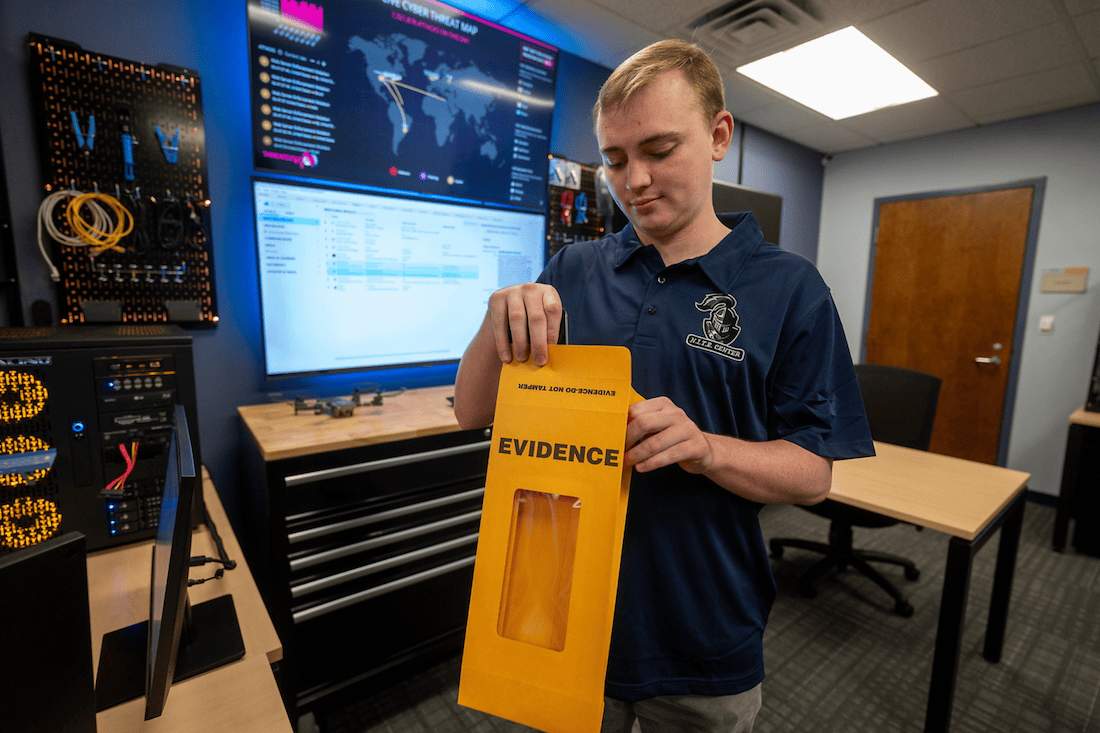
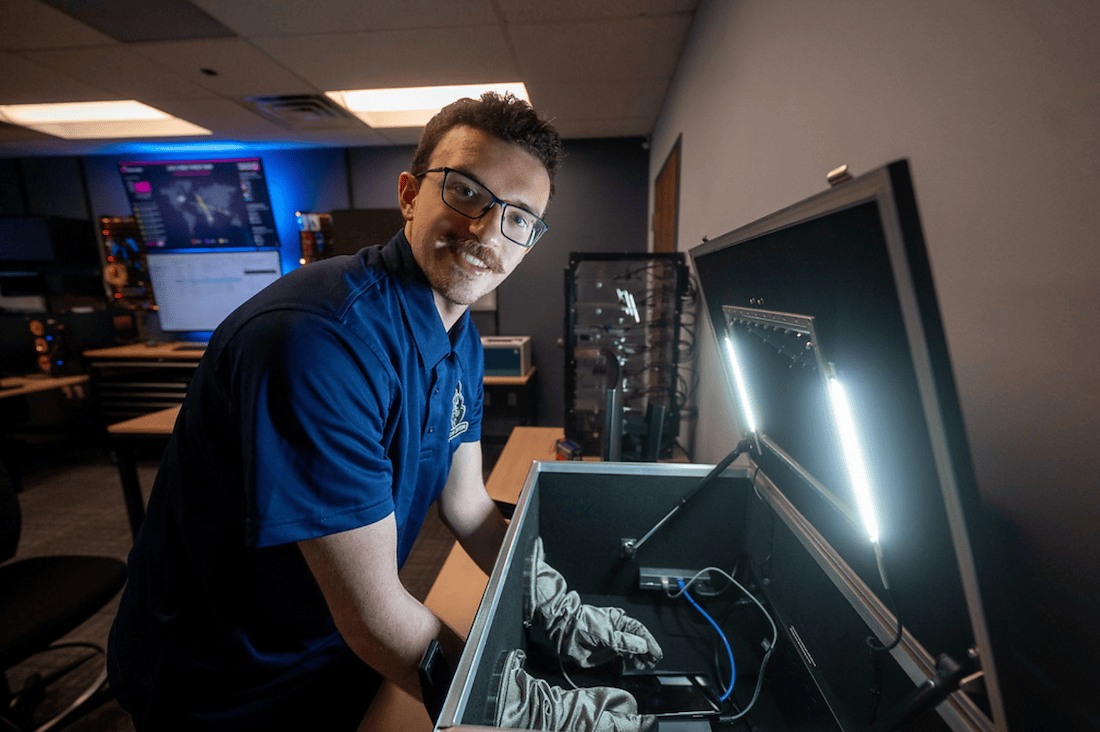
The MS in cybersecurity and digital forensics emphasizes practical learning through hacking lab simulations and applied cybersecurity training. Students explore techniques used to identify system vulnerabilities, conduct penetration testing, investigate security incidents, and collect digital evidence. The cybersecurity curriculum also includes coursework in network security, digital forensics, incident response, and a cybersecurity capstone project. These experiences help students connect advanced cybersecurity concepts with real-world security challenges.
Cybersecurity focuses on protecting computer systems, networks, and sensitive information from unauthorized access, cyberattacks, and other security threats. Digital forensics involves identifying, collecting, preserving, and analyzing digital evidence to investigate cyber incidents and determine what occurred. While cybersecurity emphasizes preventing and responding to threats, digital forensics focuses on investigating incidents and understanding their causes. Neumann's cybersecurity and forensics degree incorporates both disciplines to help students develop technical security and investigative skills.
This article examines the role of the modern cybersecurity professional while demonstrating how Neumann University's Master of Science in...
Meet with Amanda Small, Enrollment Coordinator, of Degree Completion and Graduate Programs.
Interested in the Master of Science in Cybersecurity & Forensics?